
Halloween 2026
10 Creepy Gadgets That Actually Exist
News You Need to Know. Tech You Gotta Have.
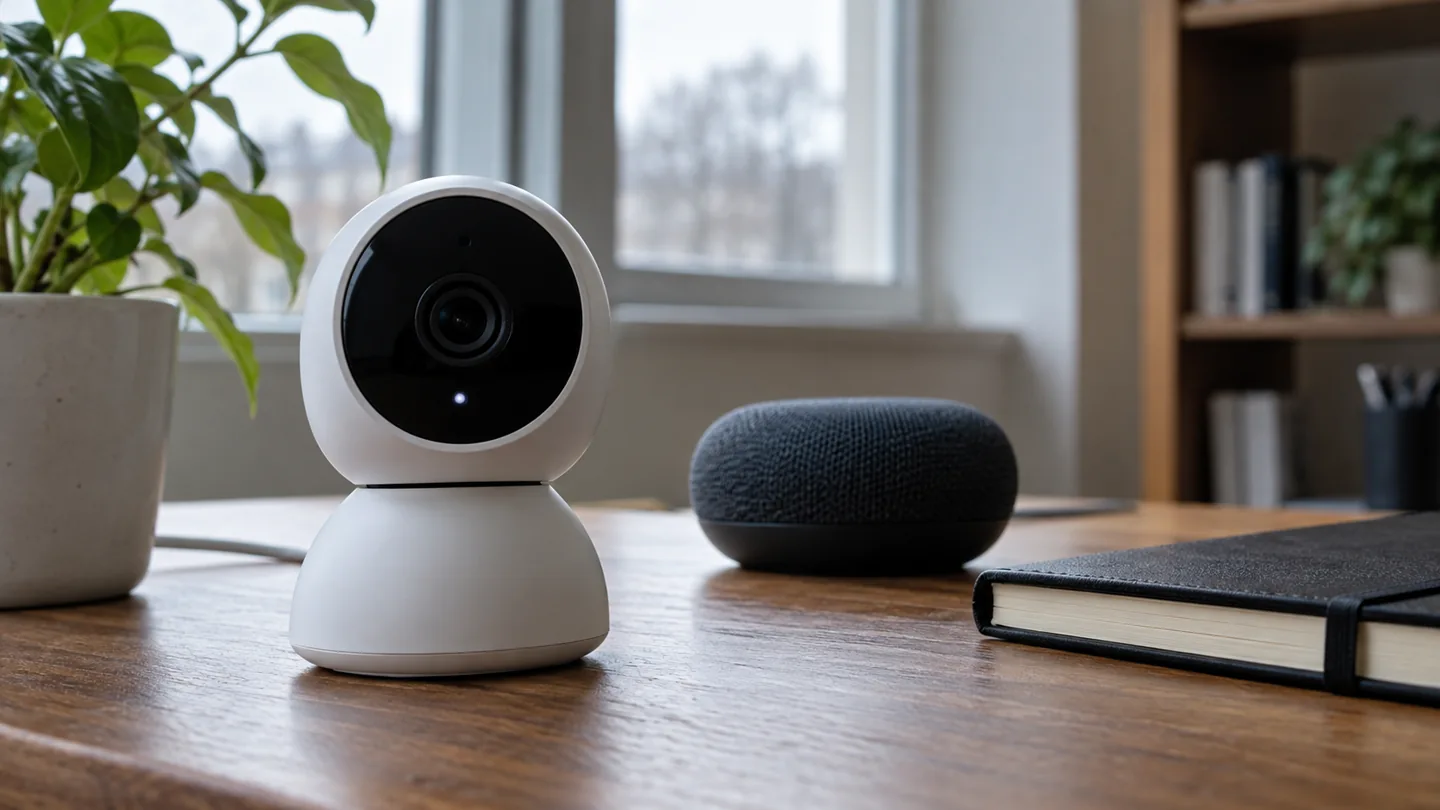
Your Halloween decorations have competition. Some of the creepiest technology already has a product page.
A camera that remembers visitors. A machine that borrows a voice. A little robot that rolls through the house while everybody else is away. None requires a haunted basement, although that would certainly help the marketing department.
We found ten real examples, separating consumer products from professional equipment, software and custom builds. “Creepy” is our Halloween opinion, not a claim that these products are malicious. The unsettling part is often a perfectly useful feature viewed from a slightly different angle.
Research checked October 24, 2026. This is an editorial roundup based on documented capabilities, not a hands-on product test. Shopping links below are ordinary, untagged Amazon searches; prices and seller availability can change.
10. Flying Halloween monster drones
Reality check: custom flying props, not one standardized retail product.
A ghost floating above the lawn has an obvious advantage over a skeleton tied to a tree: it can leave. Builders have documented radio-controlled Halloween ghost projects, including this Instructables flying-ghost build. Ghost, reaper and similar monster designs belong in one broad category; a viral clip alone does not establish a particular brand, model or product for sale.
The technology is a remotely controlled aircraft carrying or incorporating a lightweight visual prop. That makes it a real effect, not evidence that every dramatic social-media apparition is an unedited drone flight.
Enjoy the demonstration without copying crowd-chasing pranks. Decorations can affect flight behavior, and a Halloween party is a terrible place to discover that fabric and propellers disagree. Consult the FAA’s current guidance, including the rules for the type of flight and nighttime operation.
9. Voice-cloning software
Reality check: a commercially available software service, not a physical gadget.
ElevenLabs’ Instant Voice Cloning can create a synthetic voice from uploaded or recorded samples. Its documented workflow requires confirming the right and consent to clone the voice. For a harmless Halloween production, your own voice could become the narrator who politely informs visitors that the house has chosen them.
The genuinely frightening application is impersonation. The FTC warns that scammers can use cloned voices in fake family emergencies. If a familiar voice urgently demands money, independently call the person at a number you already know. A convincing sound is no longer sufficient proof of identity.
8. Spot, the robot dog that has a day job
Reality check: commercial industrial equipment.
Boston Dynamics’ Spot is a four-legged robot built for jobs such as industrial inspection and data collection. Add-on payloads and an optional arm expand what particular configurations can do.
Its unsettling quality is visual: machinery moves with an animal-like gait, but there is no animal inside. We would still feel compelled to tell it “good dog,” immediately followed by “please explain your privacy settings.”
Spot is not a pet toy or an ordinary impulse purchase. Nor does a video of one specialized configuration mean every Spot includes the same sensors, arm or capabilities. Follow the actual manufacturer’s configuration information rather than the most dramatic caption attached to a shared video.
7. Ameca, the humanoid with an expressive face
Reality check: a real professional robotics platform, available through specialist arrangements.
Engineered Arts’ Ameca is a humanoid robot used for human interaction. The company also lists Ameca among its rental options. This is more concrete than a concept rendering, but it belongs in a different category from a boxed household gadget.
The face is the hook. Human-like expressions make a machine feel socially present, which is useful for demonstrations and a little uncomfortable when your brain keeps waiting for it to blink at the wrong moment.
An expressive performance does not prove consciousness, independent judgment or an ability to do household chores. Judge the demonstrated hardware and software separately from the character the robot appears to project.
6. EBO SE, a home camera that can come looking
Reality check: an established consumer camera robot.
The Enabot EBO SE puts home monitoring on a small tracked chassis. Its documented features include remote movement, a camera, two-way audio and scheduled patrol functions.
A fixed camera watches one view. A mobile camera changes the view. That is useful when checking on a pet, and considerably stranger when the little machine enters the room while somebody speaks through it.
Check the exact SKU and regional specification before buying. Shared household access also deserves a conversation before a remotely driven camera starts making surprise appearances.
5. A thermal camera that makes the dark look occupied
Reality check: commercially sold inspection equipment.
The FLIR Edge Pro connects wirelessly to a compatible smart device and displays thermal imagery. Instead of an ordinary photograph, you see a map of temperature differences. A familiar room suddenly looks like evidence from a science-fiction investigation.
That is useful for inspection work, including investigating heat patterns. It is not a ghost detector, and a warm or cool patch does not identify its cause by itself.
FLIR also explains an essential limitation: thermal cameras do not see through ordinary opaque walls. They show surface-temperature differences. Someone promising movie-style X-ray vision has added an imaginary feature.
4. Radar that notices you sitting still
Reality check: a consumer smart-home sensor.
The Aqara Presence Sensor FP2 uses millimeter-wave radar for presence detection. Configured zones can trigger different automations, even when occupants are making only small movements.
That is the creepy trick: you do not have to wave at it. A room can react because you are there, quietly contemplating the candy bowl.
Unlike a camera, the FP2 does not supply a video portrait. Radar detection also does not mean flawless identification of every person or object. Placement and configuration matter. For an intentional spooky-room effect, see our smart-home Halloween ideas before purchasing equipment that duplicates something you already own.
3. A doorbell camera that recognizes familiar faces
Reality check: a supported feature on compatible Nest cameras and doorbells.
Google’s familiar-face detection lets users maintain a library of known faces and receive relevant camera alerts. The current documentation requires Google Home Premium and notes that the feature is unavailable for cameras based in Illinois.
The spooky part is simple: the porch has acquired a memory. The useful part is knowing more about an arrival than “something moved.”
This is neither universal across all cameras nor an infallible security decision. Google also tells users to consider applicable consent requirements before saving face data. Halloween masks make an especially poor occasion to assume a face-recognition result proves who is outside.
2. AirTag and the tiny object-location network
Reality check: a consumer item tracker.
AirTag sends a Bluetooth signal that nearby devices in Apple’s item-location network can detect, helping an owner locate an attached belonging. The ordinary use is reassuring: misplaced keys have somewhere to report for duty.
The unsettling possibility is unwanted tracking. Apple includes alerts and other protections intended to discourage misuse; its safety instructions explain what to do when an unknown tracker appears to be traveling with you.
AirTag is not a self-contained GPS-and-cellular tracking unit, and the product is intended for belongings. Do not turn a helpful item finder into an uninvited passenger in somebody else’s life.
1. Furby, still making eye contact
Reality check: a real interactive toy; this entry refers to the 2023 Furby generation.
Hasbro’s 2023 Furby announcement describes a toy with more than 600 responses, including sounds, songs and lights. Its fuzzy appearance suggests “friend.” Its sudden enthusiasm may suggest “friend who has been waiting in the dark.”
We are counting that as Halloween atmosphere, not evidence of paranormal activity. A programmed response can still be startling when you forgot the toy was in the room.
Check the model generation when shopping. Furby has existed in several versions, and connectivity claims about one version should not be copied onto another.
You Won't Believe the Rest of the Story
The most suspicious-looking character in this lineup has a surprisingly reassuring detail: Hasbro says the 2023 Furby does not connect to the internet. It can still pair with another 2023 Furby for toy-to-toy interaction. That is different from an internet connection. Meanwhile, much more ordinary-looking cameras and trackers handle genuinely consequential information.
The useful question is not simply “does it look creepy?” Ask what it senses, where the information goes and who can access it. Furby can keep its strange little stare. The settings menu deserves the closer inspection.
Prefer scares without a login? Read our ten terrifying Halloween stories and the truth behind them.
Shopping notes
For readers who already want these categories, compare Aqara FP2 listings, FLIR Edge Pro listings or 2023 Furby listings. Check the exact model, seller, support, return policy and current total price. These searches do not establish stock or a recommendation to buy.