
TONY’S TECH · MEDICAL TECHNOLOGY ANALYSIS
Would You Let Elon Musk Put a Computer in Your Brain?
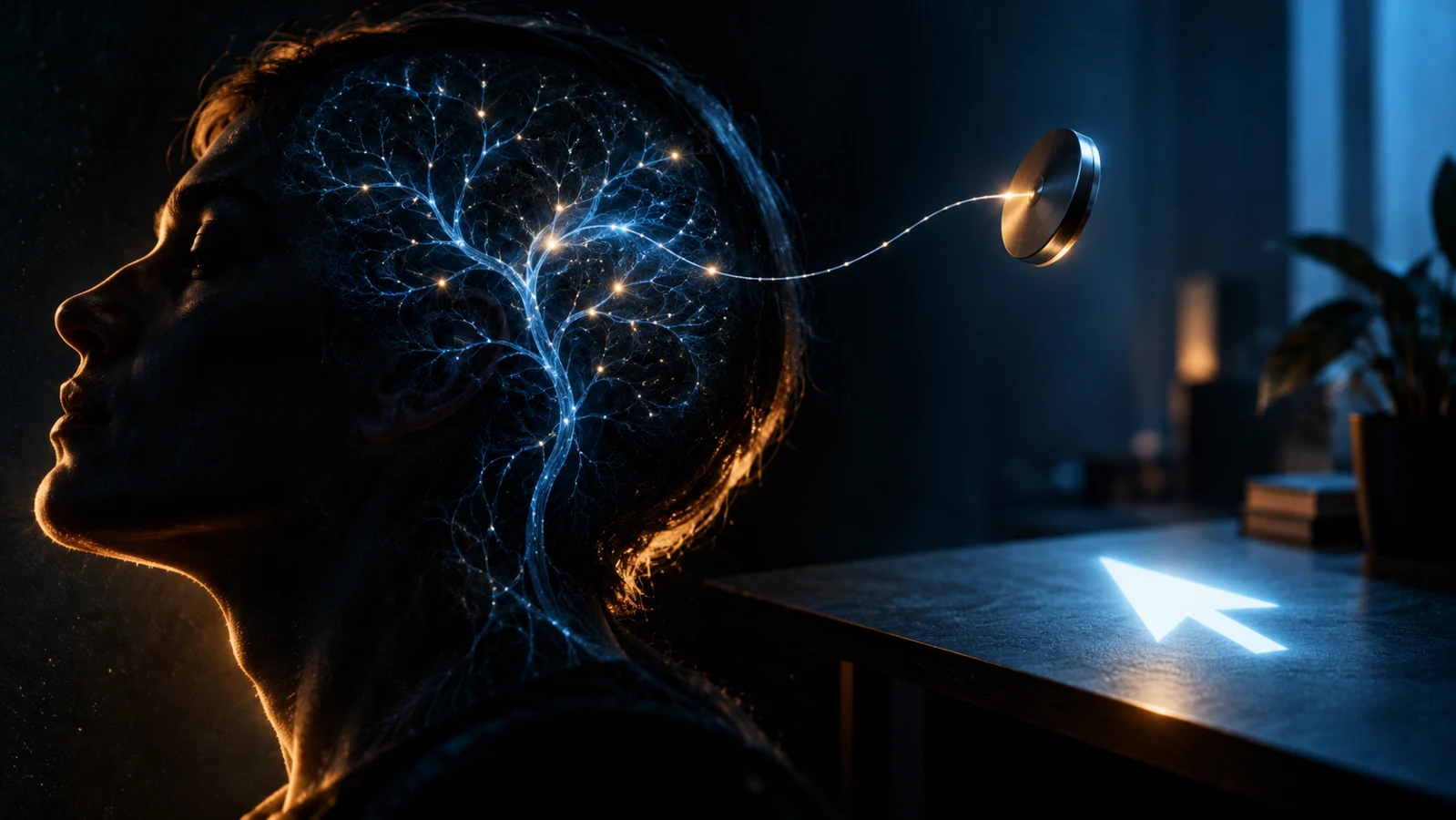
We already let our phones finish our sentences. Letting a company help turn brain signals into sentences is a considerably bigger commitment.
That is the question sitting underneath Neuralink's futuristic demonstrations. For someone living with paralysis or severe speech impairment, controlling a computer or communicating more independently could mean something far more valuable than a flashy tech upgrade: greater control over everyday life.
For the rest of us, the words “brain implant” tend to send the imagination straight to science fiction. Before we start casting the movie, we should look at what the technology actually does—and what remains unproven.
The brain chip is real. The superpowers need a fact check.
Neuralink's N1 implant is a brain–computer interface, or BCI. Its device-control research aims to turn activity associated with intended movement into commands for external equipment. Think moving a cursor, rather than downloading a new personality. The company's current device-control study targets people with severe impairment of both hands from spinal cord injury or ALS.
The hardware is implanted, not worn like headphones. In its January 2026 trial update, University College London Hospitals described more than 1,000 electrodes on extremely fine threads placed using Neuralink's surgical robot. Signals become useful when software interprets them for a particular task. That is a communication channel between a person and a machine—not evidence that a device can freely rummage through every private memory.
The strongest argument is ordinary independence
Neuralink's first human participant received an implant in January 2024. By January 28, 2026, the company reported 21 participants worldwide. That is a dated milestone, not a claim about the total today.
The company described participants using computers for studying, making art and controlling assistive robotic arms. Its accounts include a medical student using cursor control for coursework and a participant using a robotic arm to handle a drink. These are company-reported experiences, not a guarantee that every participant gets the same result.
There is also confirmation from a clinical partner. UCLH reported seven GB-PRIME participants, with surgeries performed between October and December 2025. Researchers there described an early feasibility study evaluating safety and functionality.
That distinction matters. A compelling demonstration can show that something is possible. Establishing how reliably it works across people and over years requires much more evidence.
Still, we should not undersell the goal. Being able to choose a message, open a document or navigate a screen without waiting for someone else can change the rhythm of a person's entire day.
Speech is the next big test
Neuralink's VOICE study, registered as NCT07224256, investigates using the N1 implant to help people with severe speech impairment produce text or speech from verbal thought. The listed conditions include ALS, primary lateral sclerosis, spinal cord injury and stroke; eligibility also includes impaired upper-limb function.
There is fresh activity here. On October 29, Neuralink's official updates page announced a 72-hour engineering sprint with a VOICE participant. That shows ongoing development. It does not establish that speech restoration is solved or ready for everyone.
The difference between a research breakthrough and a dependable everyday conversation is enormous. We need to know whether a system works when the user is tired, whether errors are easy to correct and how much assistance it takes to keep everything running.
The part the highlight reel cannot settle
Brain surgery brings serious considerations. In a University of Colorado School of Medicine interview, neurosurgeon Daniel Kramer identified infection, wound-healing complications and possible injury to brain tissue among the risks of implanted interfaces. He also discussed bleeding and stroke. Those are general implantation risks, not a report that every Neuralink participant experienced them.
There has been a concrete technical setback. In May 2024, Neuralink disclosed that some threads in its first participant retracted, reducing effective electrode recordings and cursor performance. The company said software changes improved performance afterward.
That is evidence of both a problem and an engineering response. It does not tell us how every implant will behave after a decade. Reliability, maintenance, replacement and long-term support remain central questions for implanted technology.
“Breakthrough” does not mean approved for sale
Neuralink's current clinical-trials page explicitly says its devices are investigational and have not been approved by the FDA or other regulatory authorities. Permission to conduct a regulated study is different from authorization to market a product.
The same caution applies to headlines about an FDA Breakthrough Device designation. The FDA explains that its program speeds development and review; devices still have to meet safety and effectiveness standards before marketing authorization.
We can be impressed by progress without turning a research label into a shopping recommendation.
Who looks after the person when the demonstration ends?
The ethical questions extend beyond surgery. Who can access the brain-signal data? What uses has the participant actually agreed to? Who pays for maintenance if a trial ends or a company stops supporting the hardware?
These are established concerns across the field. A U.S. Government Accountability Office assessment identified uncertainty about data ownership, long-term device support and insurance coverage. It also reported that some BCI research participants had devices removed when continued funding or medical support was unavailable. That finding concerns the wider field; it is not an allegation that Neuralink has abandoned its participants.
An implant that helps someone communicate creates a responsibility that outlasts a launch event. We should expect clear consent, durable support and a meaningful say for the people who use it.
So, would we say yes?
For a person facing severe functional limitations, the possible benefits could justify considering a carefully supervised trial. That judgment belongs to the participant, supported by clinicians and a clear understanding of the uncertainties.
For a healthy person hoping for faster scrolling or instant genius, the evidence presented here offers no such proposition.
Neuralink deserves attention because the medical possibilities are substantial. It deserves scrutiny for exactly the same reason. The future worth building gives people more control over their lives—and keeps them in control of the technology helping them do it.
Sources and context
Research checked October 30, 2026. Company updates describe trial experiences and development work; they do not establish outcomes for every user. Clinical-partner reporting, regulatory guidance and independent public-policy research provide additional context.
- Neuralink: Two Years of Telepathy, January 28, 2026
- UCLH: seven GB-PRIME participants, January 29, 2026
- Neuralink PRIME device-control study and eligibility
- Neuralink VOICE speech-restoration study
- Neuralink updates: October 29 engineering sprint
- University of Colorado: neurosurgeon Daniel Kramer on implant risks
- Neuralink: May 8, 2024 thread-retraction disclosure
- Neuralink: current investigational-device status
- FDA: what the Breakthrough Devices Program means
- GAO: BCI applications, challenges and policy options